The Ktunaxa and Kootenay Lake
Kootenay Lake lies in ʔamakʔis Ktunaxa, the territory of the Ktunaxa Nation, and its West Arm is also Sinixt territory. Every fact below comes from a page the nations publish themselves, or from the BC Geographical Names record and the Nelson visitor site, and each paragraph names its source.
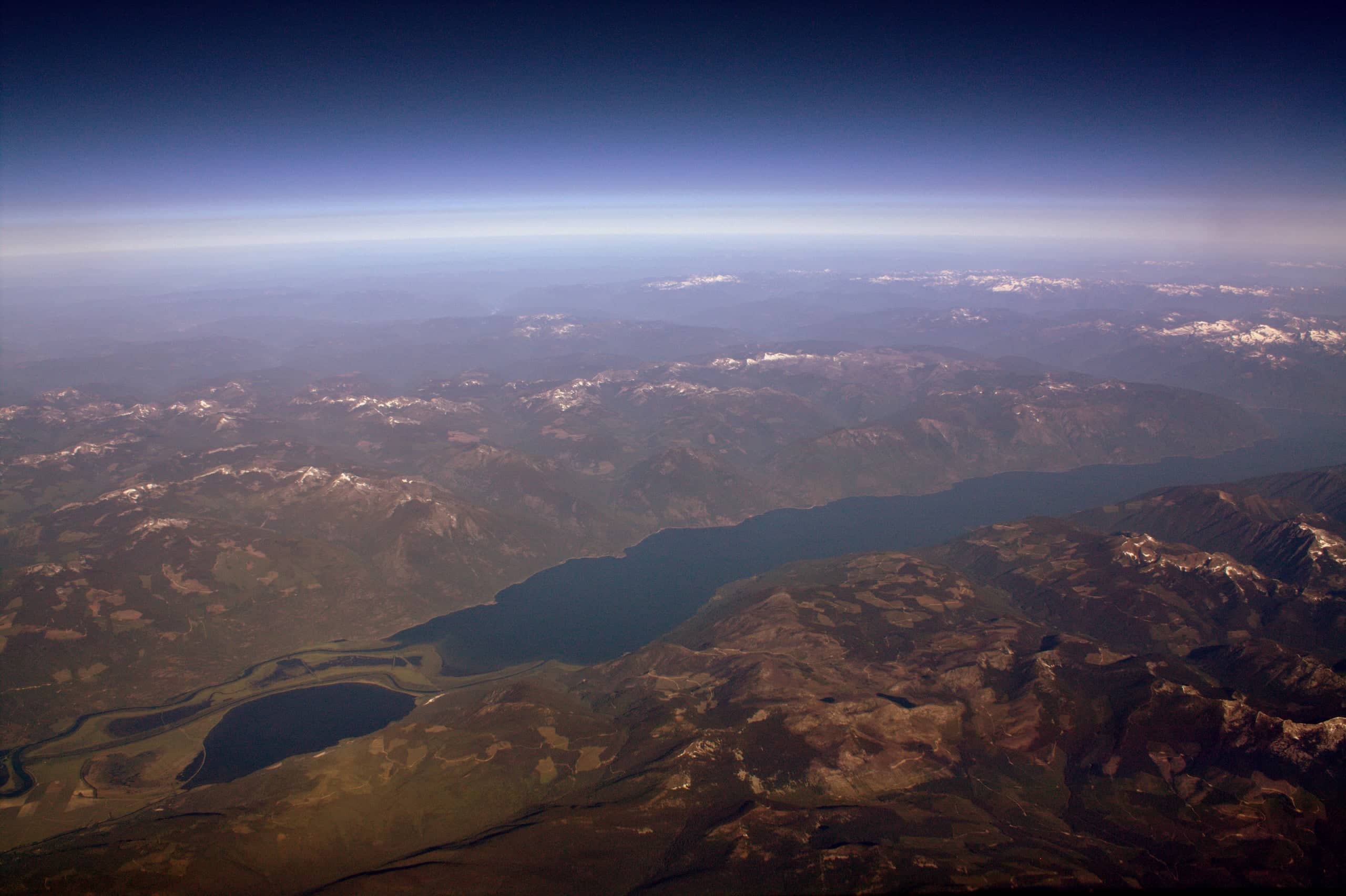
Photo: Shawn, from Airdrie, Canada · CC BY-SA 2.0 — credits
ʔamakʔis Ktunaxa: the territory
Ktunaxa is pronounced “k-too-nah-ha”. The Ktunaxa Nation’s own site states that Ktunaxa people “have occupied the lands adjacent to the Kootenay and Columbia Rivers and the Arrow Lakes of British Columbia, Canada for more than 10,000 years.” Their traditional territory, ʔamakʔis Ktunaxa, “covers about 70,000 square kilometres (27,000 square miles),” and historically included parts of Alberta, Montana, Washington and Idaho. In the nation’s words: “We fished for salmon on the Kootenay and Columbia waterways, and hunted buffalo in the foothills of the Rockies.”
Source: ktunaxa.org/about/map/, read 2026-09-23.
The nation’s Land Declaration begins: “WE, THE KTUNAXA, are the peoples of ʔamakʔis Ktunaxa, our territory and homeland, where we have lived since time immemorial.” It goes on: “We steward our lands, water and air to honour and respect ʔa·kxam̓is q̓api qapsin—All living things.”
Source: ktunaxa.org/about/declaration/, read 2026-09-23.
The Ktunaxa Nation Council is led by four Ktunaxa First Nations: ʔakisq̓nuk, ʔaq̓am, Yaqan Nuʔkiy and Yaq̓it ʔa·knuqⱡi'it. The nation crosses the border: the Kootenai Tribe of Idaho and the Ksanka in Montana are Ktunaxa communities in the United States.
Source: ktunaxa.org/about/ktunaxa-first-nations/, read 2026-09-23.
Yaqan Nuʔkiy at the south end
The Ktunaxa Nation’s own site states: “Since time immemorial the Yaqan Nuʔkiy people have occupied this beautiful valley which is now known as the Creston Valley.”
Source: ktunaxa.org/about/ktunaxa-first-nations/, read 2026-09-23.
The Band’s own history page states: “Historically and since time immemorial, the Lower Kootenay Band, locally known as Yaqan Nukiy were the original inhabitants of the Lower Kootenay area. The name Yaqan Nukiy literally means ‘where the rock stands’ and refers to an important place in the Creston Valley.” The people settled along the Kootenay River and at the south end of Kootenay Lake.
Source: lowerkootenay.com/our-history/, read 2026-09-23.
The same page describes the Kootenay Canoe, the Yaksumit: “This craft was utilized extensively to travel up and down the Kootenay River, into the wetlands and Kootenay Lake for all sustenance activities.” “The Yaksumit is widely known for its unique design, with its sturgeon nose shape, front and back …” It was made from materials all found within the Creston Valley: the bark of the Western White Pine, with birch bark for the top, and cedar, cedar roots, and maple sap or pitch from coniferous trees.
Source: lowerkootenay.com/our-history/, read 2026-09-23.
“The main diet of the Yaqan Nukiy people was wild game, especially deer, balanced with fish and waterfowl and supplemented with berries and roots.” The fish most sought after were “trout, kokanee, bull trout, burbot, and sturgeon.”
Source: lowerkootenay.com/our-history/, read 2026-09-23.
A language unlike any other
In the nation’s own words: “Ours is a language isolate and is unique in the world. We are doing all we can to preserve it for the current and future generations.”
Source: ktunaxa.org/traditional-knowledge-language/, read 2026-09-23.
FirstVoices hosts a Ktunaxa dictionary with audio, for anyone who wants to hear the language spoken.
Source: www.firstvoices.com/ktunaxa, read 2026-09-23.
Where the word Kootenay comes from
The word Kootenay comes from the nation’s own name. As ʔakisq̓nuk First Nation puts it: “Ktunaxa is our term for ourselves, while non-Indigenous people may have known us as Kootenay.”
Source: akisqnuk.org/who-we-are, read 2026-09-23.
The BC Geographical Names record for the Kootenay River says the river is named after the people of the region, and gives Ktunaxa Nation as the preferred modern name. It records “Kootenay River (not Kootenai, Kootanie, etc)” as adopted in the 2nd Report of the Geographic Board of Canada, 30 June 1900, “being the official spelling in British Columbia since 1864.” Earlier names on the same record are “Kootanie River” on Palliser’s 1857-58 map, “Flat Bows River” in his 1863 report, and McGillivray’s River, the name David Thompson gave it in 1808.
Source: apps.gov.bc.ca/pub/bcgnws/names/6263.html, read 2026-09-23.
The Sinixt at the West Arm
The West Arm, around Nelson, is also Sinixt territory. “The Sinixt people (pronounced Sin-EYE-ch-kiss-tuh) lived for millennia in the Columbia, Kootenay, Slocan, Kettle and Lardeau/Duncan River valleys without an international boundary to divide them.” In 1956 the Canadian government declared them “extinct.” “In 2021, the Supreme Court of Canada affirmed their Aboriginal right to hunt in their traditional territory.”
Source: www.discovernelson.com/discover-nelson/thisland/, read 2026-09-23.
Learn more
In the nations’ own words, on their own sites:
- The Ktunaxa creation story — on the Ktunaxa Nation’s own site, with a narration by Joe Pierre Jr., Ktunaxa Storyteller.
- ktunaxa.org — the Ktunaxa Nation Council.
- lowerkootenay.com — Yaqan Nuʔkiy, the Lower Kootenay Band.
- akisqnuk.org — ʔakisq̓nuk First Nation.
- aqam.net — ʔaq̓am.
Other references:
- firstvoices.com/ktunaxa — the Ktunaxa dictionary with audio.
- nelsonmuseum.ca — the museum in Nelson.
Common questions
How do you pronounce Ktunaxa?
Which First Nation is closest to Kootenay Lake?
Does Kootenay mean something?
kootenaylake.org is an independent guide published by Delcaro Media in Kitchener, BC. It is not affiliated with Nelson Kootenay Lake Tourism, the Kootenay Lake Chamber of Commerce, the BC Ministry of Transportation and Transit, Western Pacific Marine, BC Parks or any business listed on it.